A gay conversion camp might not seem like the ideal place for romance, but Jamie Babbit's 1999 comedy sees cheerleader Megan fall in love with bad girl Graham, despite the best efforts of her parents and camp leaders Mary and Mike. The film also examines gender roles and expectations, leading the audience to wonder if straight really is great after all.
"But I'm not supposed to like you..."
Despite it's negative setting of the True Directions conversion therapy camp, the film uses many elements we would expect from a typical romantic comedy, particularly in how it presents the unfolding romance between Megan and Graham. When they first meet, Graham takes a dislike to Megan and is quickly established as the rebel of the camp: she smokes, swears, and has no interest in behaving.

Graham seems like the total opposite of Megan, and even makes fun of her with other members of the camp. We would expect the role of "bad-boy" to be played by a male character, but instead Graham is presented as the dangerous love interest for straight-laced Megan. This narrative continues throughout the film; Megan slowly befriends and grows closer to Graham, and we even see Graham's "sensitive side" after her parents walk out during family therapy. One night she convinces Megan to sneak out and go to a gay club, once again rebelling against camp rules, only to get jealous when Megan dances with another girl. The two argue outside the club before kissing for the first time:
This dramatic scene has all the elements we might expect from a typical romantic comedy: an argument, the refusal to admit feelings for one another, before an unexpected kiss. The scene is made all the more sweet by Megan telling Graham, "I'm not supposed to like you....But I wanna do that again". Previously, Megan had only kissed her long term boyfriend Jared with no enjoyment, instead letting her mind wander to think about the bodies of the other girls on the cheer-leading team. Here, she takes charge of her own sexual agency and kisses Graham because she wants to.
This regaining of confidence continues in a later scene when the two girls have sex for the first time; they kiss and are seen touching each other in softly lit moments (like any rom-com, the sex is implied but not actually seen) and Megan tells Graham she's "never felt that way before". The moment is sweet and romantic, not sexualised as we might expect from a movie about a lesbian relationship, and suggests a new chance to be happy for Megan: she tells Graham that before they met, cheerleading was the only thing that "kept her happy".
The couple even gets a climactic happy ending: after being kicked out of True Directions for her relationship with Graham, Megan seeks shelter with Larry and Lloyd, two "ex-ex-gays" who had escaped from the camp themselves and now live nearby. With their help, Megan returns during the camp's graduation ceremony and tries to rescue Graham, who tells her she can't leave because of her father's threat to disown her. Megan uses a fool-proof tactic to win her over: she performs an adorable cheer declaring her love for Graham, before running off back to Larry and Lloyd's truck. Thinking she has lost Graham forever, she turns only to see Graham climb on board the truck and kiss her. The truck then drives off into the sunset, classic rom-com style.
"God is good, God is straight!"
As well as a heartwarming romance, the film also casts a critical eye over gender roles and expectations. After an "intervention" from her friends and family, Megan is sent to True Directions, a gay conversion therapy camp that promises to cure its members with a 5-step program. Everything about the camp is intended to conform to conventional gender roles; the girls dress in pink uniforms and are taught how to clean, care for babies and dress in a feminine way, while the boys dress in blue and are shown how to chop firewood, fix a car engine and play football. Mary, the camp's founder, instills the traditional notion that men are the masculine breadwinners of the family, while women are feminine caretakers.
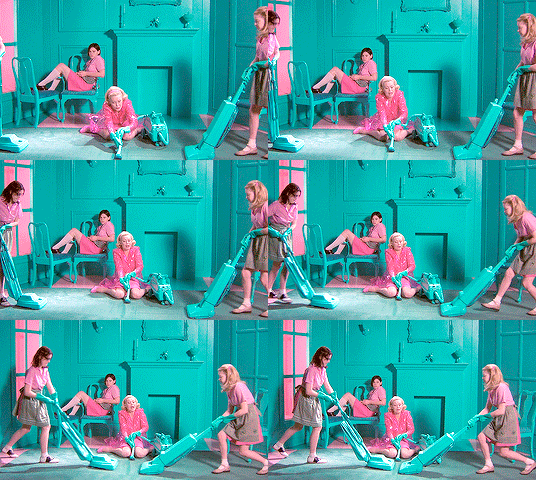
The film is ironic in its depictions of these teachings, as camp leader Mike is played by none other than Ru Paul Charles, known for his hit single "Supermodel" released under his drag persona Ru Paul. His role is only made funnier as throughout the film we see him and the other boys being attracted to Mary's son Rock; often appearing in a tight fitting vest and shorts, Rock teases the boys by using phallic objects such as a broom or chainsaw. While we might assume he's mocking the boys, we later see him dancing enthusiastically to pop music, suggesting he himself might be gay too.

Expectations around sex and relationships are also explored; the Final Test of the camp sees the group taking part in a "sexual lifestyle simulator" where they must perform the tasks they have been taught as well as simulate straight sex. Graham must perform alongside Rock, and is visibly uninterested, and when Joel asks about foreplay, Mary tells him it's for sissies: " real men go in, unload, and pull out!"
Juxtaposed with this scene is Megan at the home of Larry and Lloyd; the two men bicker like a married couple before reconciling and showing affection. Their home is decorated in rainbow colors and we even see red ribbons on their napkins, a possible reference to red ribbons worn to show support for those living with AIDS. The film suggests that a gender conforming, heterosexual lifestyle is not all it's cracked up to be, and that embracing one's true self is the key to ultimate happiness.
The film was groundbreaking for its time, not only in its setting of conversion therapy, but also its criticism of gender expectations and depiction of gay romances in a time when many LGBT narratives revolved around AIDS. It seems more relevant than ever at present when conversion therapy is still prevalent and mainstream media lacks LGBT+ representation. The romance between Megan and Graham tells us that love wins, even in the most unlikely of situations.


I thoroughly enjoyed your blog analysis of the film! I have never seen it, nor heard of it, but the conversation it has with gay conversion therapy and having it set in a romantic comedy space is quite peculiar (when I first thought about it)...it is just peculiar for all the absolute correct reasons. The fact that Graham and Megan meet and fall in love in a place that is designed to destroy their love is completely shell-shocking and well-deserving. This truly speaks to how their love shatters any boundaries and preconceived notion.
ReplyDeleteI told you this before, but I'll say it again because why not: I never knew RuPaul is in this film! I saw that picture of him wearing the "Straight is Great" shirt for years, I just never knew where it stems from. Having RuPaul, the mother of drag queens, in this film further drives this dense conversation of gender and I am so here for it. This deep conversation of LGBT+ issues is never-ending and highly important, and to see this topic being discussed in this film makes me more happy that these issues will (and have always) appear at any moment because they are just THAT important.