Pride and Prejudice: A Latter-Day Comedy,
was released in 2003
with a cast including Kam Heskin and Orlando Seale. The film was adapted from
Jane Austen’s Pride and Prejudice as
a modern romantic comedy. It didn’t receive much praise from audiences, mainly
for its poor editing and unsuccessful application of the original storyline.
Critiques did however enjoy Heskin and Seale’s performance as Elizabeth and
Darcy.
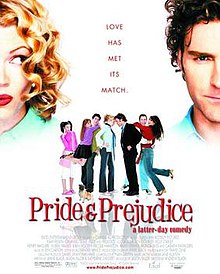 |
| Figure 1 - The film cover https://en.wikipedia.org/wiki/Pride_%26_Prejudice:_A_Latter-Day_Comedy |
The film has basic similarities to Austen's original work like everyone's name, personalty traits, and suitor situations. One of the ways it referenced the novel was every so often the screen displayed a quote from the novel that related to the upcoming scene. For example, the screen showed the words, "Lydia and Kitty were ignorant, idle and vain," then the next scene cut to the two of them pampering themselves and reading a book on how to obtain a man.
The modern spin on the film was focused on the idea that the girls were not sisters, they were college roommates and best friends. Elizabeth was an aspiring writer and was not focused on finding love. Jack Wickham, a good-looking player, was interested in her, but she was too focused on finding a publisher for her book. Darcy was a successful businessman who also showed interest in her. The film depicts their love story as more of an internal battle within Elizabeth's self, rather than how the novel makes Darcy out to be more arrogant, causing Liz to question the chance of their potential relationship. Because the novel is longer, there is more time to draw out this back-and-forth battle between the two of them. The film's version is much shorter and almost seems as if a date to dinner is the extent of the conflict. This date is a great example of how hard Darcy fought for her feelings because he acted as a publishing company wanting to meet with her to discuss her book. When Liz found out what was really going on, she was disgusted that he would take advantage of her like that. She imagines herself throwing her glass of water in his face while walking out, only to have actually accidentally knocked it over along with an entire tray of food as she stormed out. The depiction of Darcy is decently comparable to the novel character in the fact that both men are deemed to be well-off and somewhat better than others. Liz's character is more similar because she is older than the average woman looking for a mate and turns down several men along the way.
The gender roles in this film are not as male-heavy as in the novel. After all, this is a modern-day romantic comedy, not based in the 1700s. Pride and Prejudice holds strong to the values of setting your daughter up with a wealthy man so he can provide for her, instead of marriage being based off of love. Now, marriage starts with romance and love, while finances fall into place later. The girls are much more independent and make their decisions for themselves. They do however, fall into the stereotypical role of girls where they spend all their free time gossiping about boys and making themselves perfect just to get their attention. The sisters in the novel don't have as much control over who they end up with and don't have magazines to help them decide their every move when talking to a guy. The female roles stand out much more, especially Elizabeth, for her commitment to her career and not letting her value to a man control her life.
Pride and Prejudice: A Latter-Day Comedy is not the best film in Hollywood, but it holds value in modernizing Jane Austen's classic novel and putting a comedic twist on it. Although it is a loose depiction of the original storyline, it is worth the watch if you find interest in other versions of Pride and Prejudice.

Hey Lexi! I watched the same film as you for this assignment. I like that you touched on the films way of putting in the novel quotes. I really enjoyed that aspect and didnt really mention it in my blog post. I remember in class today ou saying you didnt enjoy the film at all- I can totally understand that! I think that the Morman based culture that the film takes place in allows for the film to sort of slip in some similarities to the noevl- like marriage. I was reading over 2 other blog posts from other films and a lot of people seemed lucky enough to have more similarities between Austens version and their film. I wish our film wouldve had some more similiarities. How about you?
ReplyDeleteOverall i think you did a really good job with your blog post!
Based on what you've written about it, I don't think this movie would be very good. I especially didn't like that there didn't seem to be much conflict between Darcy and Elizabeth, since that was the whole point -- both of them displayed pride and prejudice, not just Elizabeth. While I don't think I'll be watching this movie any time soon, I did enjoy reading your blog!
ReplyDeleteI think this version sounds very realistic, and I think that it's a very interesting take. The characters and their circumstances seem plausible for it to happen today. Maybe realistic isn't the right word; I would like to say more relatable. When you explained the scene where she imagines throwing a glass at him, I found that very relatable! We always play out scenes in our heads that wouldn't really happen, and I'm sure that scene is very funny when it snaps back into reality. I would like to watch it just to see if it has any more "relatable" value to it. Well done on your blog post!
ReplyDelete